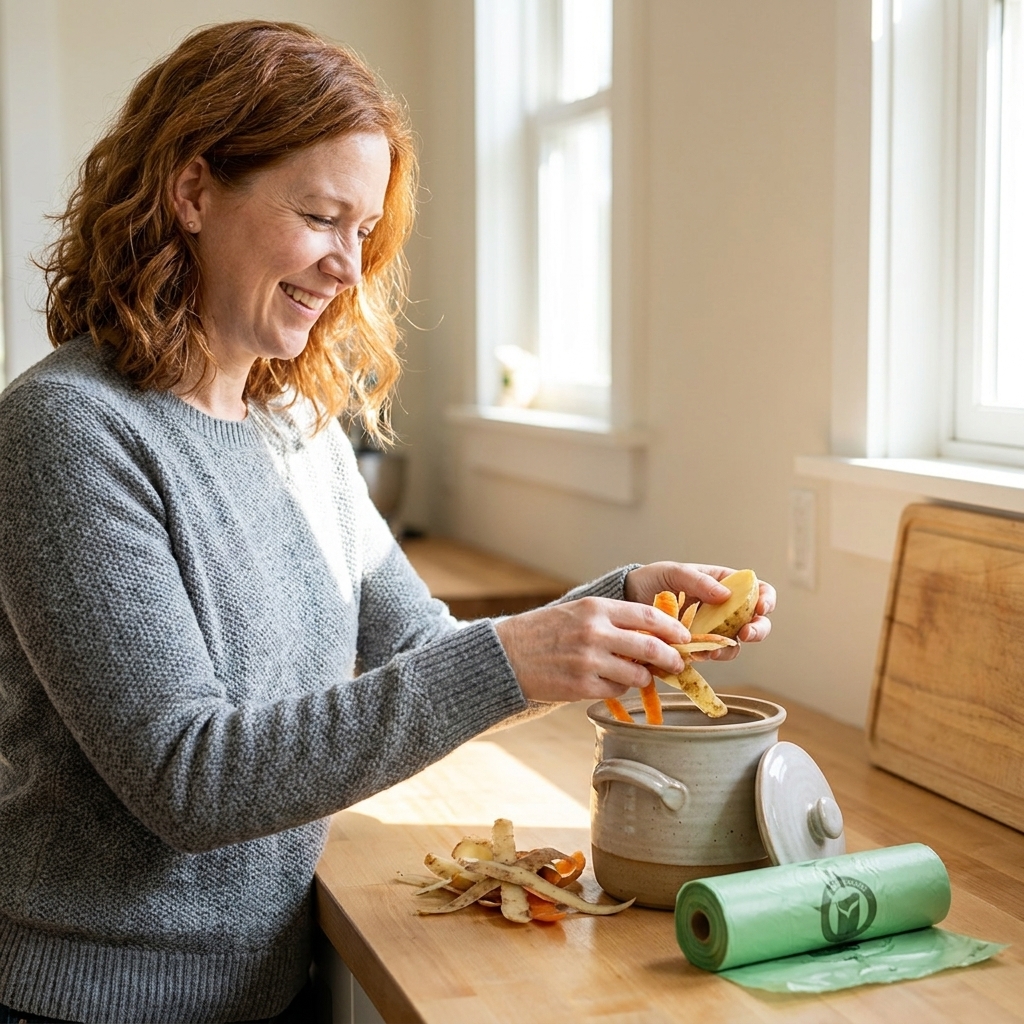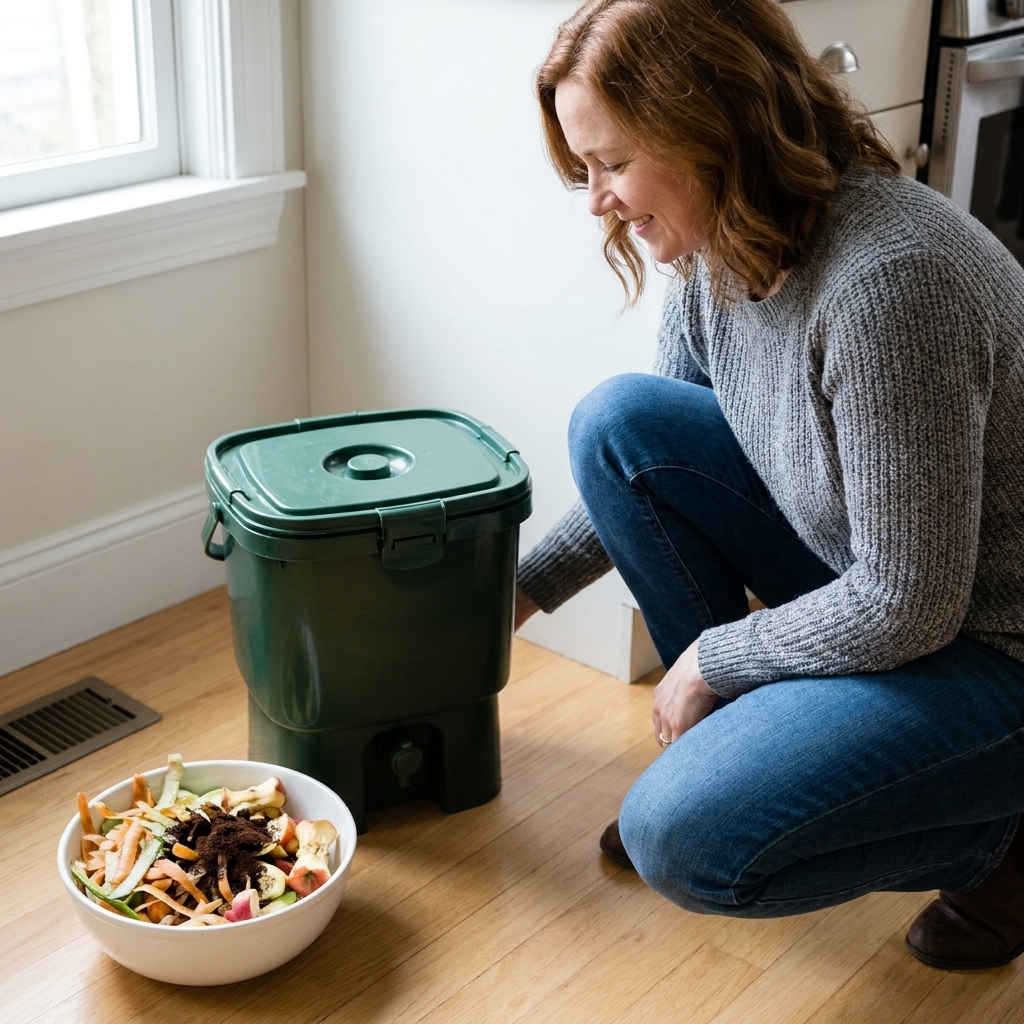
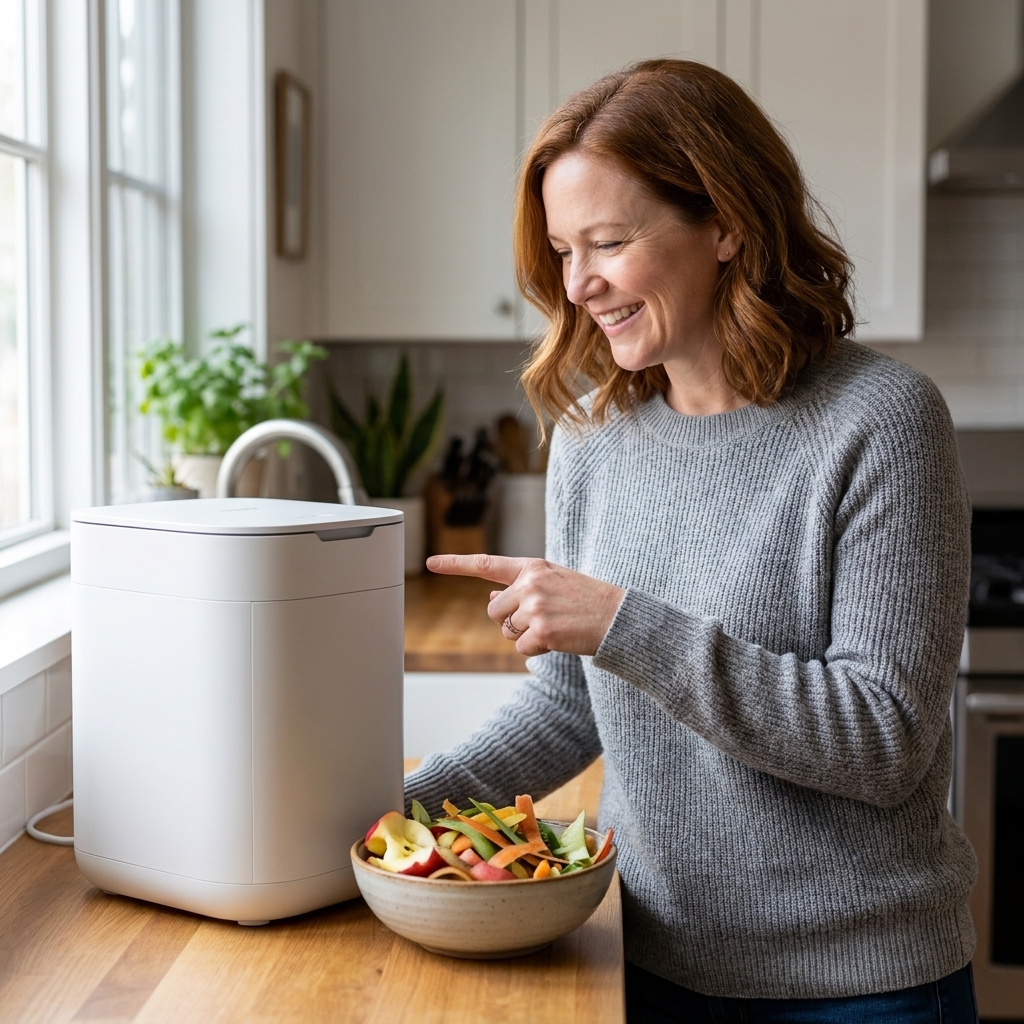
I get why these machines are tempting. Twelve years ago, when I was staring down a yard of compacted clay and a sad little tomato patch, I would have happily plugged in anything that promised better soil by dinner time. Electric countertop “composters” are marketed as a tidy, odor-free shortcut that turns banana peels into garden gold in a few hours.
But here is the honest truth from one dirt nerd to another: many electric countertop composters are not composters in the biological sense. Most models on the market function primarily as food dehydrators and grinders. They shrink and sanitize the mess factor, but the output usually still needs time with microbes before it becomes stable, plant-friendly compost.
What real composting is
Before we judge the gadgets, it helps to agree on what compost is.
Composting is a biological process. Bacteria, fungi, and other decomposers eat organic matter and convert it into a stable, soil-like material (humus-rich compost) that does not stink when you wet it and does not go through a big heat spike when you pile it up again.
A few terms I will use in this article:
- Finished compost: dark, crumbly, mostly unrecognizable ingredients, and it stays calm when moistened.
- Curing: extra time after the active phase, when compost cools and stabilizes.
- Thermophilic: the hot phase of composting, when heat-loving microbes drive temperatures up.
- Pre-compost: organic material that is processed or partially broken down, but not yet stable compost.
In a classic backyard hot pile, that process involves:
- Microbial digestion that generates heat (often around 130 to 160 F in a well-built pile)
- Moisture like a wrung-out sponge
- Oxygen from turning or airflow
- Time for curing, even after the pile cools
When compost is finished, you cannot easily recognize the original ingredients, and it typically does not reheat noticeably when you water it or mix it into soil.
What countertop units really do
Most countertop units use some combination of heat, agitation, and airflow to reduce food scraps into a lighter, drier product. Some include a charcoal filter for odors and a carbon additive or “pods” to help with smell and texture.
Could there be some microbial activity in some machines? Sure, especially if a unit runs cooler, stays moist inside, or uses an additive that introduces microbes. But in many popular designs, the cycle is dominated by warm air drying and mechanical mixing, not the long, wet, microbe-driven breakdown that makes true compost.
The usual steps
- Drying: Warm air removes moisture from scraps. This is the big volume reducer.
- Grinding or mixing: A paddle or blade breaks material into smaller pieces.
- Deodorizing: Filters and drying reduce smells. Some additives also mask odor.
That is why many cycles finish in 3 to 12 hours. Drying is fast. Microbes building stable compost is not.
So what is the output?
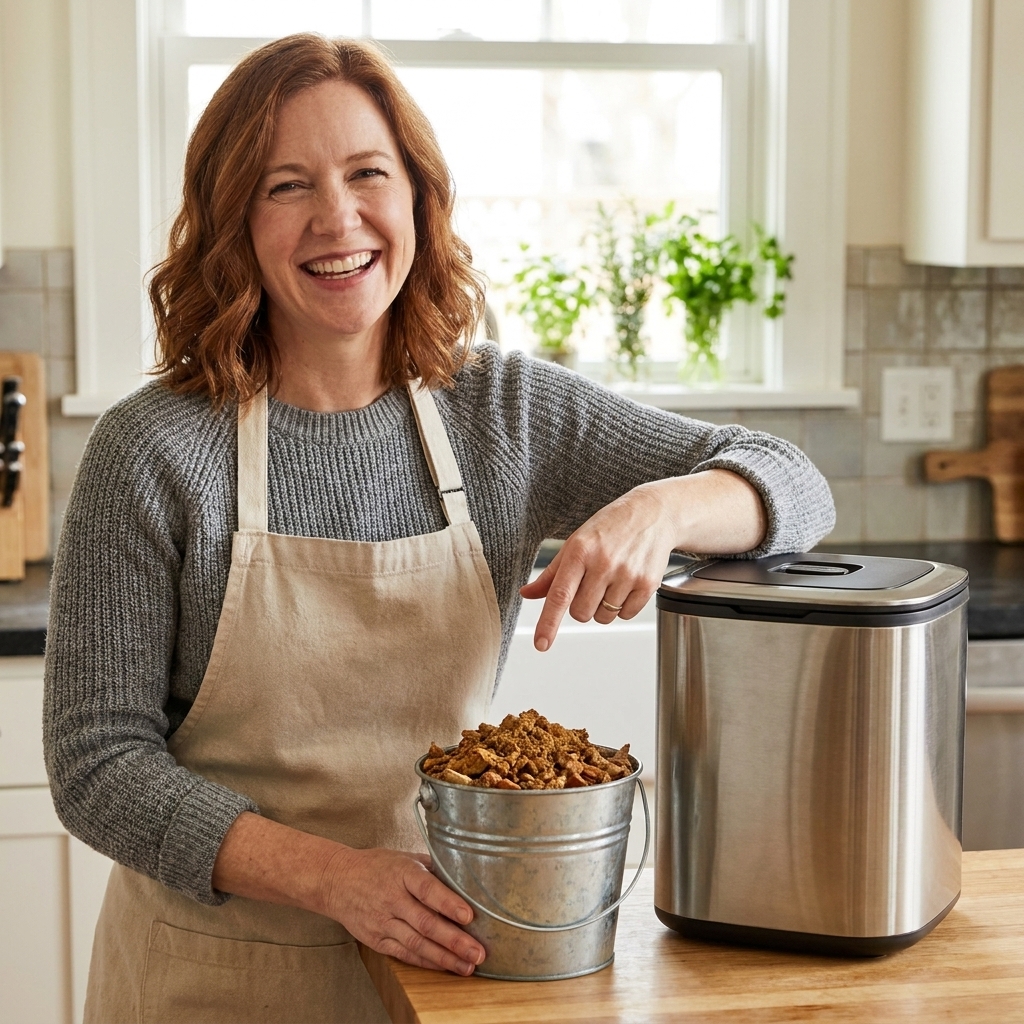
Think of it as dehydrated, ground food waste. It is often called “pre-compost” because it still needs biological breakdown. Some brands call it “compost,” but the label is doing a lot of work there.
Compost vs dried scraps
If you are trying to figure out whether what you have is compost or not, here are a few practical checks I use at home.
1) Does it rehydrate and get funky?
Put a handful in a jar, moisten it, and leave it loosely covered for a few days. Keep it somewhere ventilated and out of main living areas. If it smells strongly sour or rotten, it is still very “food-like” and needs composting time.
2) Does it heat up?
If you wet the material and mix it with browns (dry leaves, shredded cardboard) in a small bin, it may warm up. Warming means microbes are finally doing the real work. Finished compost typically does not heat much.
3) Can you still recognize ingredients?
Little eggshell chips are normal, but obvious bits of onion skin, pasta, or avocado are a sign you are not done yet.
4) Does it make plants look hungry?
Immature compost and other actively decomposing organic matter can temporarily tie up nitrogen as microbes multiply and finish breaking it down. This is context-dependent. It is more likely when you mix not-yet-stable material into soil right around seedlings, or when you blend it with lots of high-carbon browns and the mix is still in active breakdown mode. If you have ever seen plants turn pale after adding “compost,” this is often why.
Is it safe for the garden?
Sometimes, but I would not treat it like finished compost. Here is the down-to-earth guidance I give friends.
Best ways to use it
- Add it to a real compost pile: This is my favorite. It is already chopped and drier, so it blends easily. Mix it with browns and keep the pile moist.
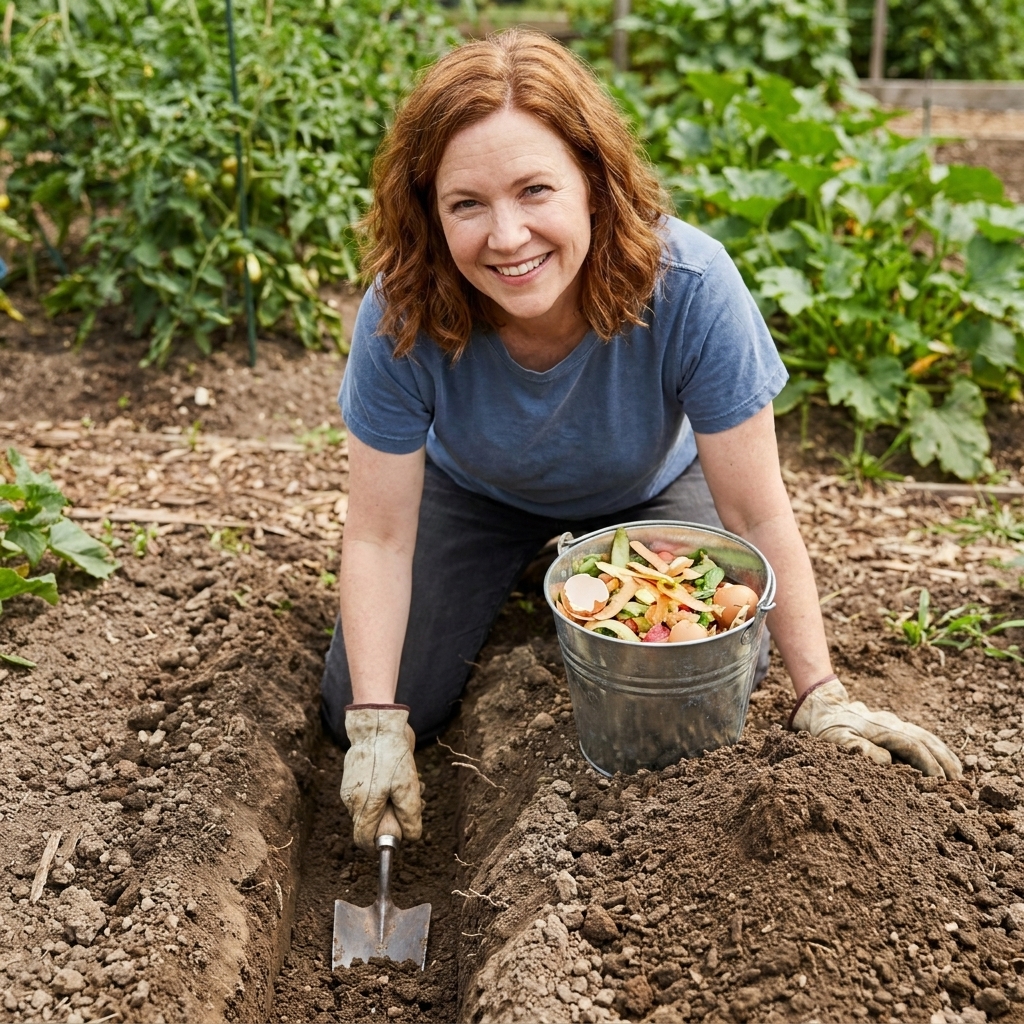
- Bury it (trench composting): Dig 8 to 12 inches deep, add the material, cover well, and plant in that spot later. Great for beds you are prepping for next season.
- Feed it to a worm bin carefully: Only in small amounts and mixed with bedding. The dried material can rehydrate into a paste and go anaerobic if you overdo it.
When I would not use it directly
- Seed starting mixes or anything for tiny seedlings
- Right against plant crowns (especially in wet weather)
- Houseplants unless you have tested it and it smells clean when moistened
If you want the “one sentence” rule: treat the output like a concentrated organic amendment that still needs composting, not like finished compost.
If you do decide to use it in soil without further composting, go conservative. I treat it like a small add-in, not the main event. As a rough guideline, keep it to a thin sprinkle worked into the top couple inches, or a small fraction of a potting blend, and watch how the soil smells after watering.
Pathogens and weed seeds
This is where marketing can get squishy.
Backyard compost piles can reduce pathogens and weed seeds when they hit and hold high temperatures throughout the pile. In managed composting, a commonly cited benchmark is maintaining about 131 F (55 C) for several days, with turning or mixing so all material spends time in the hot zone.
Countertop units may heat contents, but:
- Temperatures vary by model and cycle.
- Material may not heat evenly throughout.
- The process is often more like drying than sustained thermophilic composting.
So if you are composting for food gardens and you are concerned about pathogens, I would not rely on a countertop machine alone. Also, while many manufacturers recommend avoiding meat, bones, greasy foods, or large amounts of liquids, rules vary by brand and model. If meat or dairy did go in, I would absolutely finish the material in a properly managed compost system before using it around edible crops.
Those “soil tech” claims
When brands talk about creating “soil,” they are usually referring to texture and convenience, not the full biology of compost.
Here is what the technology can genuinely do well:
- Reduce volume of food scraps quickly
- Reduce odor in the kitchen compared to an open caddy
- Create a drier, easier-to-handle material that is less gross to store
What it cannot shortcut on its own is the long, slow part: microbial transformation into stable humus. Soil is not just ground-up organic matter. It is a living community.
Energy, filters, trade-offs
I am not anti-gadget. I am pro-honest-expectations. So here are the practical trade-offs to consider.
Electricity
These devices use heat and motors, so they draw power. Exact numbers depend on wattage and cycle time, but many units land in the ballpark of a few tenths to around 1 kWh per cycle. Your real-world impact depends on how often you run it and how your local grid generates electricity.
Also, dehydration shrinks volume and weight, but it does not make the nutrients disappear. If the output still needs composting (it usually does), the machine is best viewed as a pre-processing step that can make the rest of your compost routine easier, not a complete replacement for finishing and curing.
Consumables
- Charcoal filters need replacing to keep odors down.
- Additives or pods may be optional or required depending on the brand and how sensitive you are to smell.
Noise and smell
Most are not silent. Some smell a little like warm cooked vegetables during a cycle, even with filters. Not horrible, but not nothing.
Capacity limits
Family kitchens can produce more scraps than a small unit can handle daily. If you regularly cook a lot of produce, you may still need a backup plan.

How I would use one
If you already own a countertop composter or you are considering one, here is a system that actually works.
My pre-compost workflow
- Run scraps through the machine when my kitchen caddy is full.
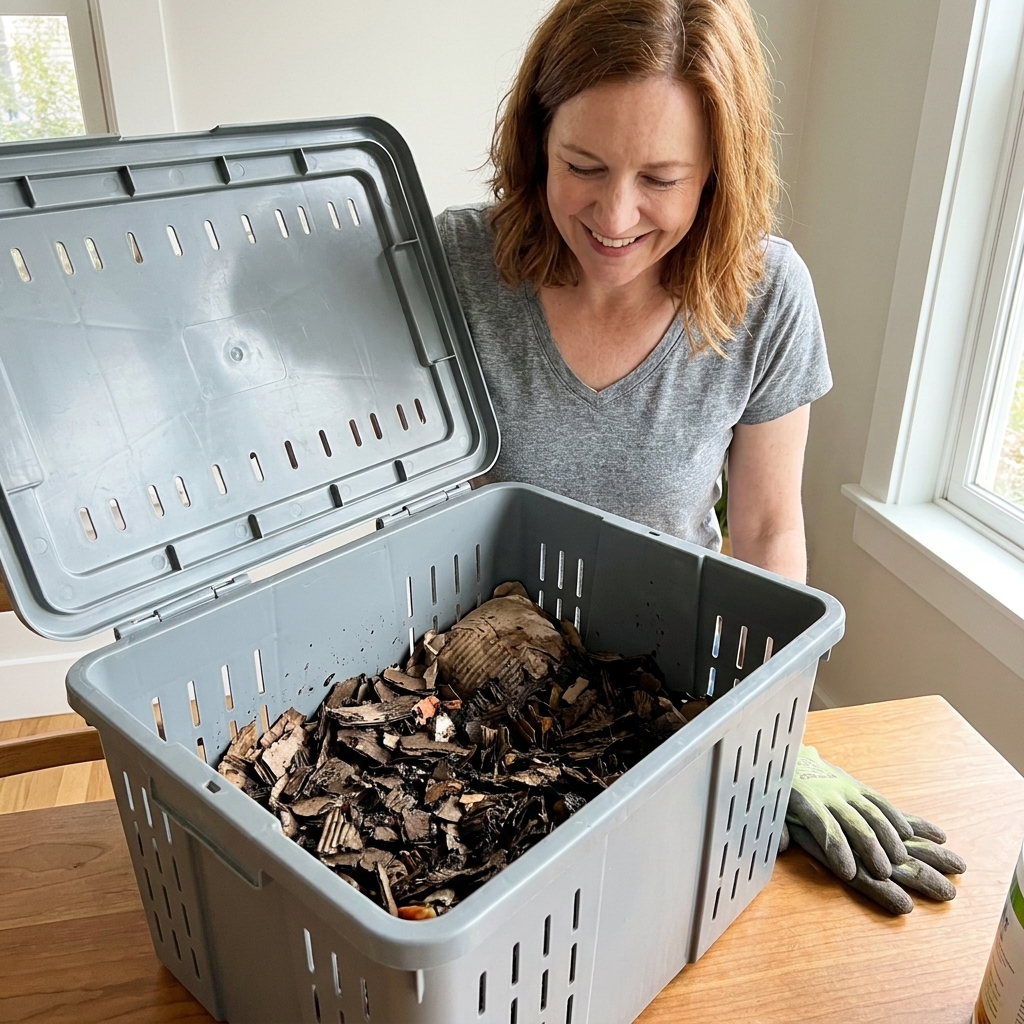
- Store the output dry in a lidded bucket.
- Once a week, add it to my outdoor compost bin with a generous scoop of shredded leaves or torn cardboard.
- Moisten and mix until it feels like a wrung-out sponge.
- Let it cure after it looks finished. A few extra weeks makes a huge difference in how gentle it is on plants.
This setup shines in winter, in apartments with balcony bins, or for anyone who struggles with fruit fly season.
Are they worth it?
It depends on what problem you are solving.
Worth it if you
- Need odor control in a small space
- Want to reduce mess and handling of wet scraps
- Plan to finish the material in a compost pile, trench, or worm system
- Do not have access to curbside or community composting
Maybe not if you
- Expect true, finished compost in hours
- Want a “set it and forget it” soil amendment you can immediately top-dress seedlings with
- Primarily compost yard waste (these machines are for food scraps, not leaves and branches)
FAQ
Is the output compost or fertilizer?
Usually neither in the finished sense. It is best described as dried, ground organic matter that still needs decomposition. Nutrients are there, but they are not yet in a stable, plant-ready form.
Can I sprinkle it on top of soil as mulch?
You can, but go light. When it gets wet, it can mat, smell, or attract critters depending on what went in. I prefer mixing it into an active compost system or burying it.
Will it attract pests?
Dry material is less attractive than fresh scraps, but once it rehydrates outdoors, it can still draw interest. Burying it or composting it properly is the safer route.
Does it replace a backyard compost pile?
Not if your goal is finished compost. It can replace the kitchen scrap bucket and serve as a pre-processing step, which is genuinely useful for some households.
What if I only have a patio?
A countertop unit plus a small, sealed outdoor bin (or a worm bin) can be a great combo. The key is giving that output a place to finish decomposing before it touches your plants.
My bottom line
Electric countertop composters are not magic compost makers. They are very convenient dehydrators and grinders that can make food waste cleaner and easier to manage, especially in small spaces.
If you treat the output like pre-compost and finish it with microbes, time, and moisture, it can absolutely become something your garden will thank you for. If you expect instant, finished compost, you will likely end up with stunted seedlings and that “why do my plants look hungry?” feeling I remember all too well from my early clay-yard days.
Good soil still runs on biology. The best gadgets are the ones that help you work with that, not skip it.