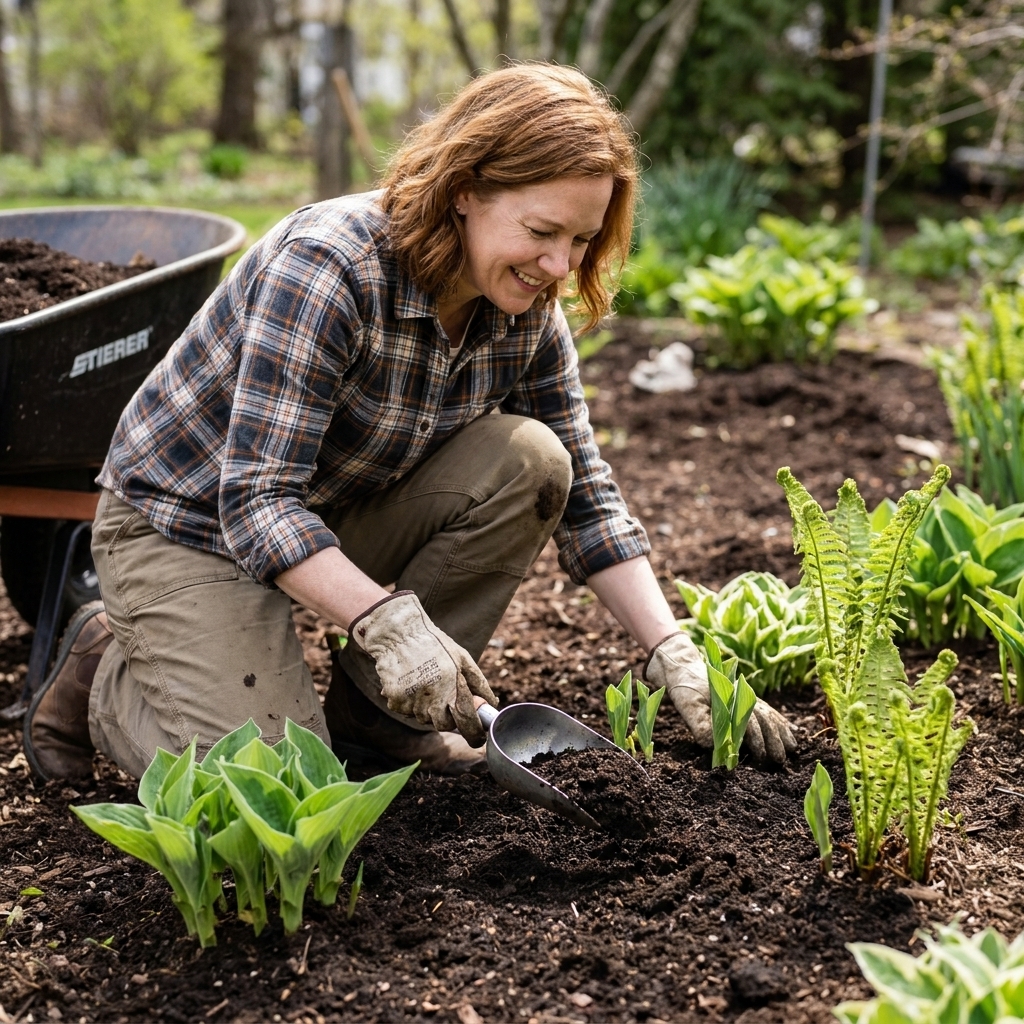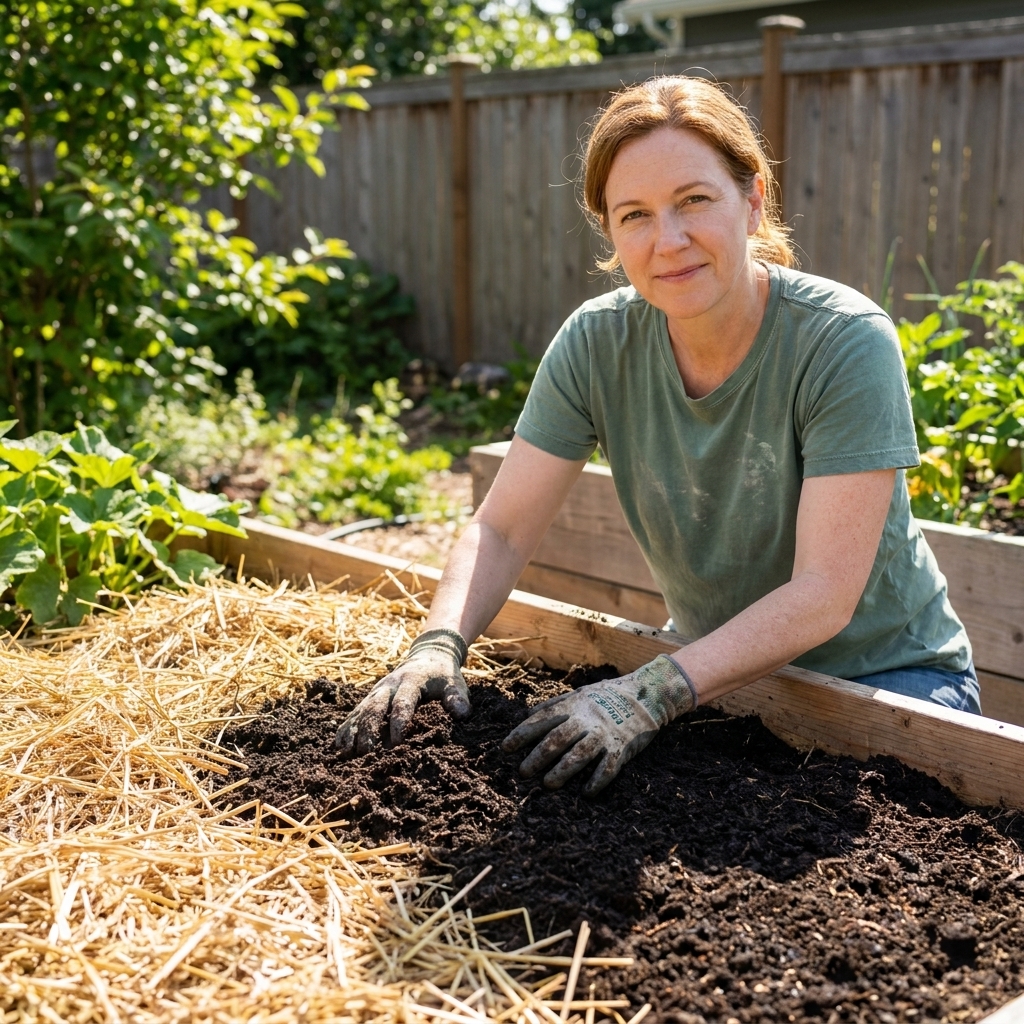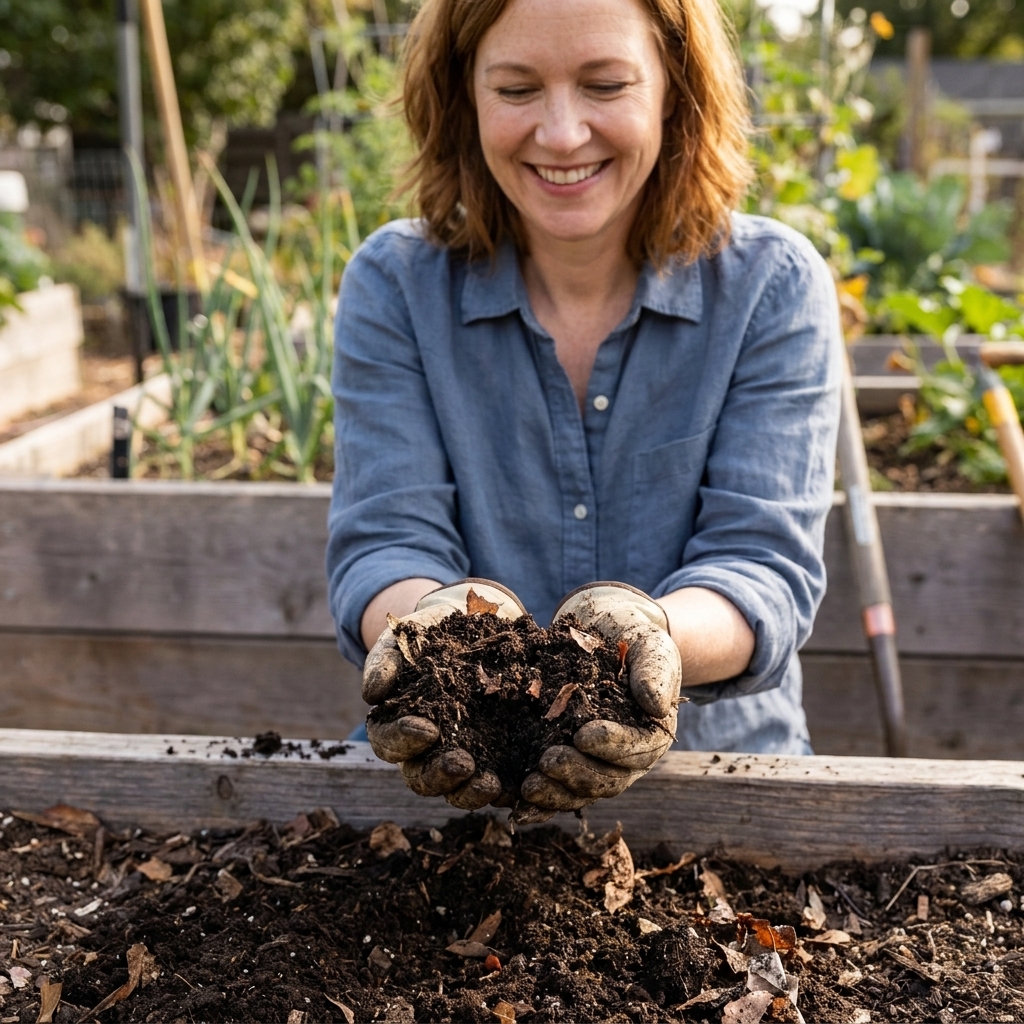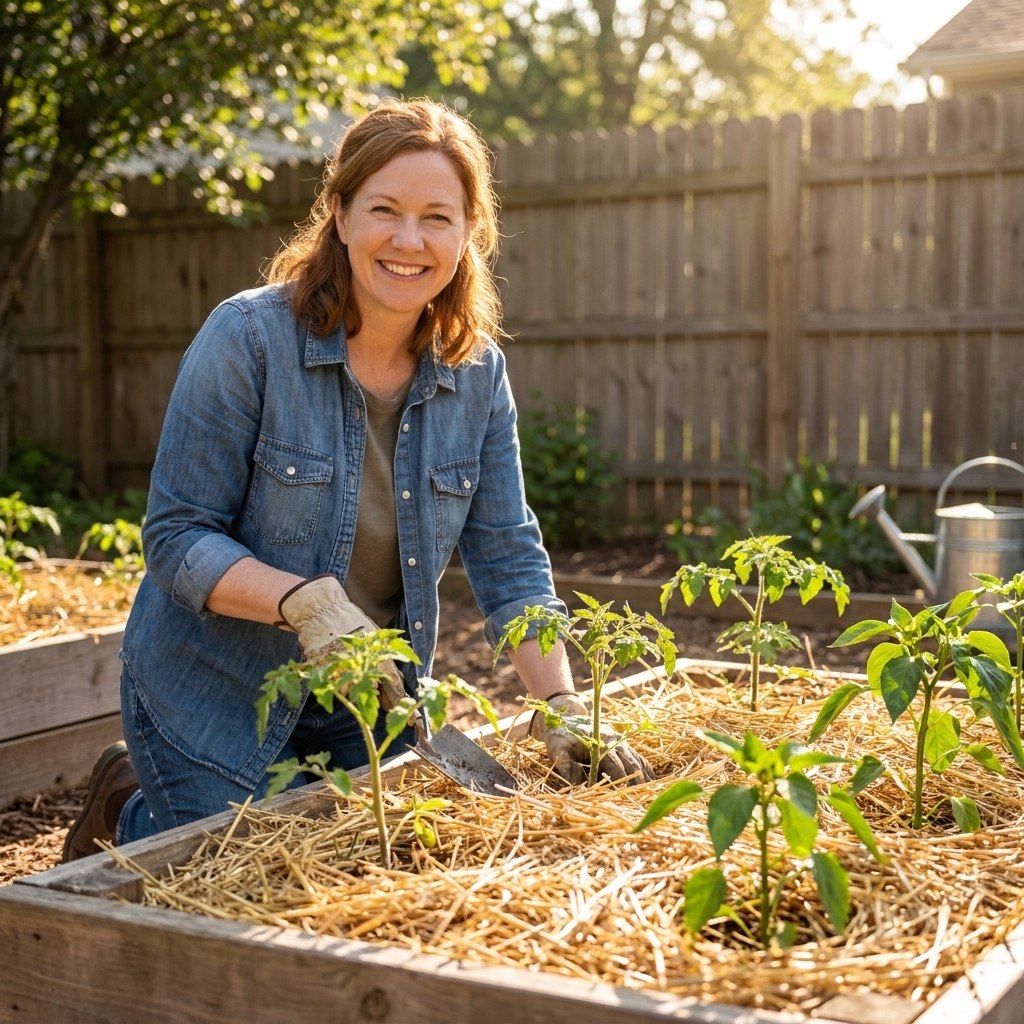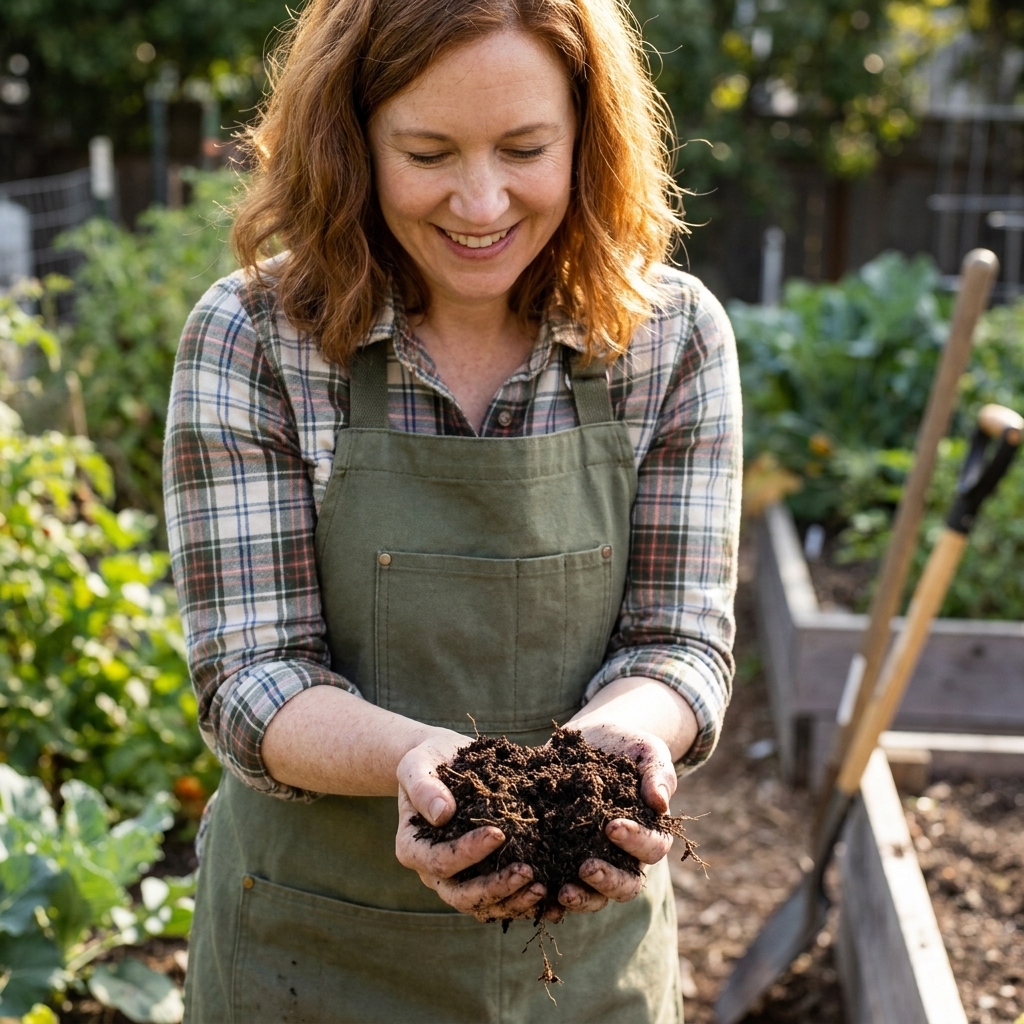
The first time I topdressed a bed, I was honestly just trying not to mess anything up. I had tomatoes already flowering, a ring of compacted clay around every stem, and one big fear: if I dug, I would snap roots and set the whole garden back. Topdressing turned out to be the gentle fix. You lay compost on the soil surface like a cozy blanket, let water and soil life gradually pull the goodness down over time, and you keep all those feeder roots right where they are.
Below is exactly how I topdress my established beds at Compost Grove: how much to apply, when to do it, where it helps most, and the common mistakes that turn a helpful layer of compost into a headache.
What topdressing is and why it works
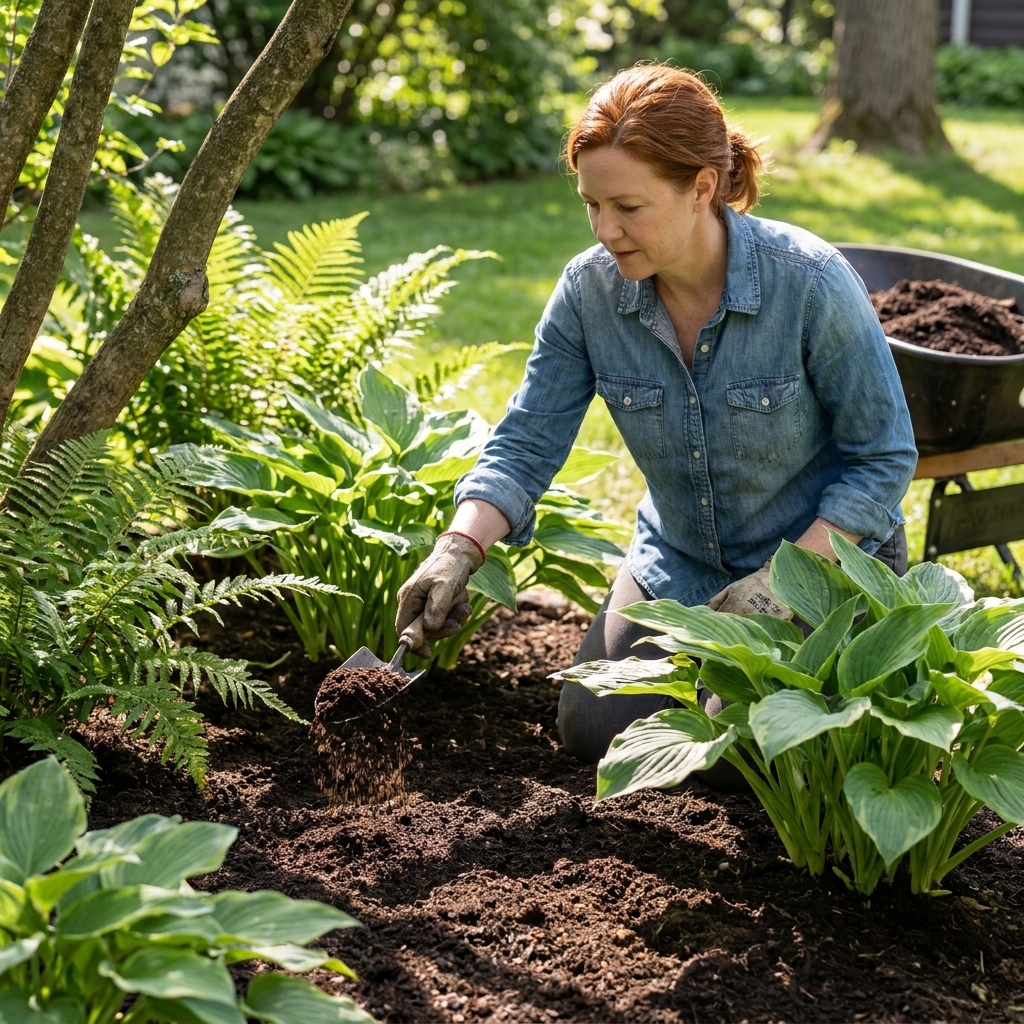
Topdressing is simply applying a layer of finished compost on top of the soil around existing plants instead of digging it in. It works because nature does the mixing for you, just not all at once. Moisture, microbes, earthworms, roots, and seasonal cycles gradually incorporate compost into the top layer of soil.
- Slow-release feeding: Nutrients in compost become available gradually as microbes and moisture break them down.
- Better soil structure: Compost encourages crumbly, well-aerated soil over time, especially in beds that tend to crust over or compact.
- More water resilience: A compost layer helps the soil hold moisture in dry spells and absorb water better during heavy rains.
- Root-safe: You avoid tearing up shallow feeder roots that do most of the plant’s drinking and snacking.
- Boosts soil life: Earthworms and microbes come up to feed at the surface, then carry organic matter downward bit by bit.
If you are used to “working it in,” topdressing can feel too easy. But it is one of those garden practices where gentle and consistent beats aggressive and occasional.
When to topdress garden beds
There is no single perfect day, but there are a few times that consistently give the best results.
1) Early spring
This is my favorite moment for veggie beds and mixed borders. As soon as the soil is workable and you can walk around without making mud ruts, add compost before plants get huge. Spring topdressing helps seedlings and transplants settle in without a big fertilizer punch.
2) Midseason
Heavy feeders like tomatoes, peppers, squash, cucumbers, and corn often appreciate a “snack” partway through the season. If growth is slowing, leaves are paler than usual, or fruiting has really kicked in, a thin topdress can support the next stretch.
3) Fall
Fall topdressing is my quiet little soil investment account. A layer of compost after you pull spent plants protects soil from winter rains and erosion and gives microbes time to work. By spring, the bed is noticeably softer and easier to plant into.
4) After early crops
If a bed has an empty patch in summer, I topdress before replanting with something like beans, basil, or fall greens. It resets the soil without turning everything over.
When not to topdress
- Right before a big downpour: Compost can wash, especially on slopes. If storms are coming, wait.
- On frozen ground: It tends to sit there and can run off with snowmelt.
- When plants are stressed and wilting daily: Water and shade first. Compost helps long-term, but it will not instantly fix heat stress.
How much compost to apply
Most topdressing problems come down to applying too much or piling it in the wrong spot.
Thickness guidelines
- Established veggie beds: About 1 inch over the whole bed is a safe baseline. In hungry beds with low organic matter, up to 2 inches can be helpful. If your soil is tight, poorly drained, or you are using a rich manure-heavy compost, stay closer to 1 inch.
- Perennials and ornamental beds: 1 inch is usually plenty.
- Lawns (compost topdressing): 1/4 to 1/2 inch, sifted if possible, so grass blades are not smothered.
- Containers: 1/2 inch, then lightly scratch just the top surface with your fingers, staying shallow.
If you are working with very rich compost or compost that is heavy on manure, lean toward the lower end. You can always add another thin layer later. It is much harder to undo a thick, soggy blanket around plant crowns.
How to estimate volume
If you want a quick, real-world rule: 1 inch of compost over 100 square feet takes about 0.31 cubic yard (a little under 1/3 yard). So a 4 by 8 bed (32 sq ft) at 1 inch is roughly 1 cubic foot of compost, give or take.
Topdressing step by step
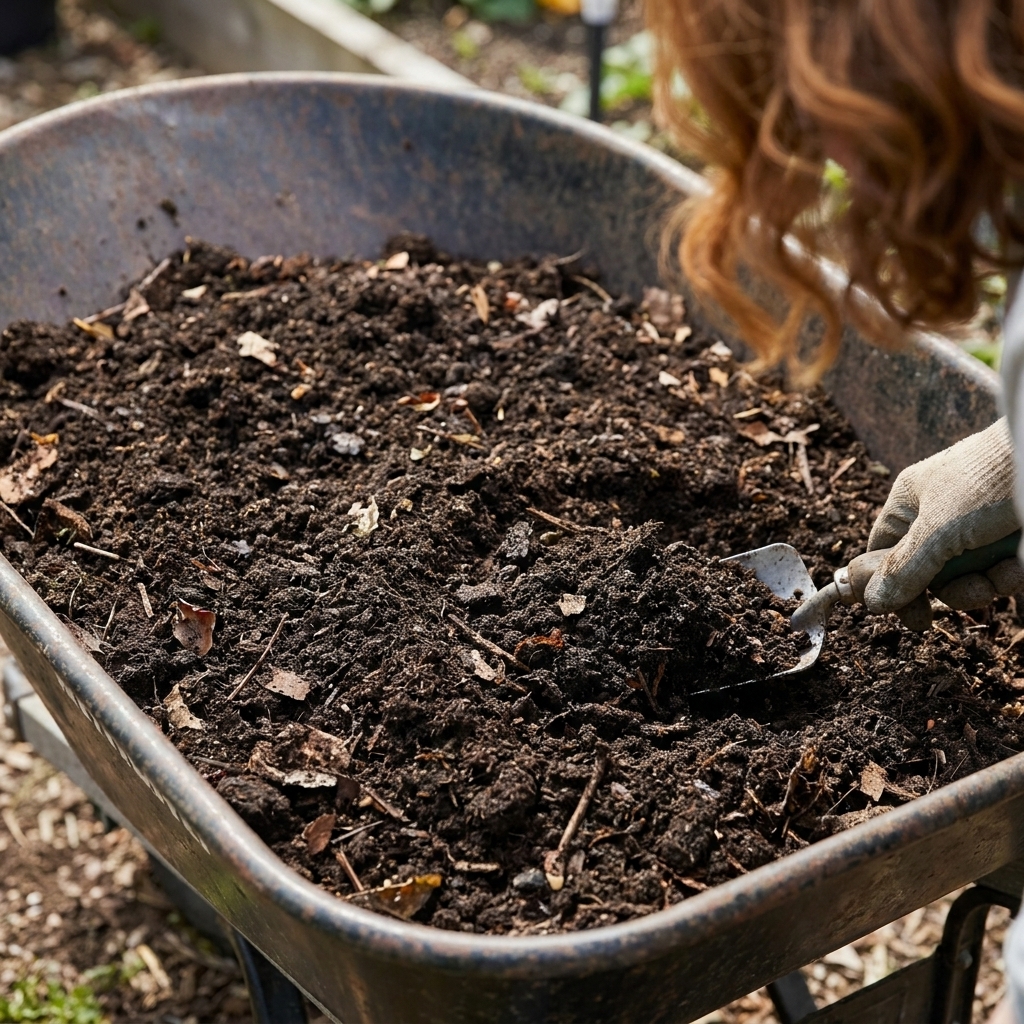
You do not need fancy tools for this. I use a bucket, a small scoop, and my hands.
- Weed first. Pull weeds or cut them at the soil line. If you topdress over a weed jungle, you are basically tucking them in.
- Water lightly if the soil is bone dry. Slightly moist soil helps compost settle and “connect” with the surface.
- Spread compost evenly. Aim for an even layer across the bed, not little mountains.
- Keep compost off crowns and stems. Leave a small bare ring around the base of plants. For most plants, 1 to 3 inches of breathing room is enough.
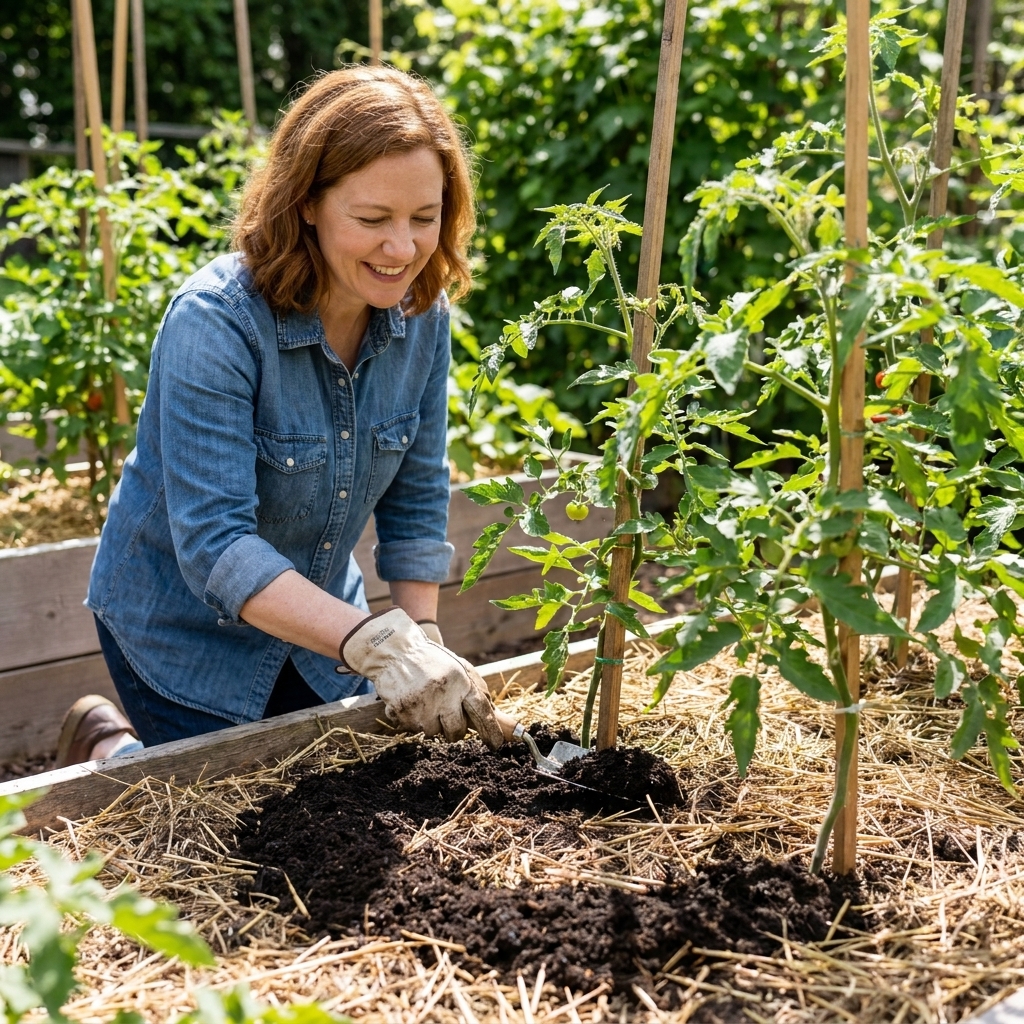
- Optional: cover with mulch. If you mulch, compost goes down first, mulch on top. This keeps compost from crusting in sun and helps moisture stay steady.
- Water it in gently. A soft watering helps settle it so it does not blow around or dry into a crust.
Then you let the worms and microbes do the “digging” for you.
Where to place compost
Tomatoes, peppers, and eggplant
Topdress in a wide donut around the plant, out toward the drip line. Keep compost from touching the main stem. I usually do 1 inch at planting time, then another 1 inch when the first fruits are sizing up.
Leafy greens and herbs
These are easy: a thin 1/2 to 1 inch layer between rows keeps soil splash down and encourages steady growth without pushing them too hard.
Perennials
Perennials like compost, but they hate being buried. Sprinkle 1 inch around the plant and keep the crown clear. Early spring or fall works best.
Shrubs and small trees
Think wide and shallow. A thin layer under the canopy, starting a few inches away from the trunk and extending outward, is more useful than a thick pile at the base. Never create a compost volcano against the trunk.
Strawberries
Topdress lightly around plants, not over the crown. I like a thin compost layer after renovation or in early spring, then tuck straw mulch on top.
Compost quality matters
Topdressing puts compost right where roots, stems, and soil organisms will interact with it quickly. That means finished compost is the goal.
Finished compost should be
- Dark and crumbly, like rich chocolate cake crumbs
- Earthy-smelling, not sour, sharp, or ammonia-like
- Cool to the touch, not actively heating
- Mostly unrecognizable, with only small woody bits left
If compost is not finished
- Nitrogen tie-up: Fresh, chunky material can temporarily steal nitrogen from the soil as it breaks down.
- Seedling damage: Hot or high-ammonia compost can burn tender plants. Properly finished compost should not be “hot.”
- Pests: Food scraps that are not fully broken down can attract critters.
If your compost is close but still a little chunky, I save it for paths, around shrubs, or under a thicker mulch layer where it can finish quietly.
Sourcing notes for edible gardens
If you buy compost (or accept a “free” pile from a stable), ask a couple quick questions. It saves heartbreak later.
- Herbicide carryover: Compost made from hay, straw, or manure can sometimes contain persistent herbicides. If a supplier cannot answer questions about inputs, I use it on ornamentals first, or I do a simple bean or tomato seedling test before putting it in my vegetable beds.
- Manure-based compost: Great stuff when fully finished. I just make sure it is well-composted and not sharp-smelling.
- Biosolids: Some gardeners avoid compost made from municipal biosolids. If that matters to you, ask your supplier what the compost is made from.
Compost plus mulch
If you use both compost and mulch, here is the simple rule:
- Compost first (touching the soil)
- Mulch second (on top)
Compost feeds and inoculates the soil. Mulch buffers temperature, reduces evaporation, and keeps weed seeds from getting light.
Mulch options that pair nicely with compost topdressing:
- Shredded leaves
- Leaf mold
- Straw (especially for gardens and strawberries)
- Untreated grass clippings in thin layers (only if they are not matted)
- Wood chips for paths and around perennials and shrubs
Common mistakes
Piling compost against stems or crowns
Why it is a problem: It can trap moisture and invite rot or pests.
Fix: Pull compost back so the base of the plant can breathe.
Going too thick
Why it is a problem: Thick layers can shed water if they dry into a crust, or stay soggy and low-oxygen when they are wet.
Fix: Stick to about 1 inch, maybe 2 inches max in most beds, then repeat later if needed.
Topdressing over established weeds
Why it is a problem: Some weeds will happily push through, now with extra nutrients.
Fix: Weed first. For really weedy spots, lay cardboard, then compost, then mulch.
Using compost that is too salty or too hot
Why it is a problem: Manure-heavy or unfinished compost can stress plants.
Fix: Use finished compost, and apply lightly around sensitive crops. When in doubt, topdress less and water well.
Quick guide
| Garden area | Best timing | How much compost | Extra notes |
|---|---|---|---|
| Vegetable beds | Spring, midseason, fall | About 1 inch, up to 2 inches | Apply over the bed surface, keep off stems and crowns, water in gently |
| Perennial borders | Early spring or fall | About 1 inch | Do not bury crowns |
| Shrubs and trees | Spring or fall | 1/2 to 1 inch under canopy | Start several inches away from trunk |
| Lawns | Spring or early fall | 1/4 to 1/2 inch | Use fine compost so grass is not smothered |
| Containers | During active growth | About 1/2 inch | Do not overload pots, consider a compost blend |
FAQ
Should I dig compost in or leave it on top?
For established beds, leave it on top. Digging risks damaging roots and disrupting soil structure. If you are starting a new bed, mixing compost into the top few inches can be helpful, but topdressing is the safer maintenance move.
Can I topdress and plant right away?
Yes. If you are transplanting into an existing bed, you can topdress first, then plant through it. Just avoid burying stems that prefer a dry crown, like many perennials and herbs.
Will topdressing attract bugs or rodents?
Finished compost rarely causes trouble. The issues usually come from compost that still contains recognizable food scraps. If critters are a concern, use well-finished compost and cover it with mulch.
How often should I topdress with compost?
Once a year is a solid baseline for most beds. In heavy-feeding vegetable gardens, I often do a spring topdress and a midseason thin refresh, especially if I am not using any other fertilizers.
Do I need a soil test?
I think it is worth it every few years, especially in vegetable gardens. Compost is wonderful, but repeated applications can build phosphorus faster than plants use it in some soils. A basic soil test helps you compost with confidence and spot gaps that compost alone may not fix.
Can I topdress with compost tea instead?
Some gardeners use aerated compost tea as a microbial drench, but evidence is mixed and it does not add meaningful organic matter the way compost does. If you have to choose one for long-term soil improvement, topdressing wins.
The gentle habit that changes a garden
If your beds are already planted and you want healthier soil without a full renovation, topdressing is the quiet workhorse. A thin layer, repeated over time, is how compacted dirt turns into living soil. It is how a tired bed starts holding water again. And it is how you feed plants in a way that looks a lot like the forest floor, which is basically my favorite gardening teacher.
If you want to make it even easier on yourself, put “topdress the beds” on your calendar for early spring and fall. Future you, and your roots, will be grateful.