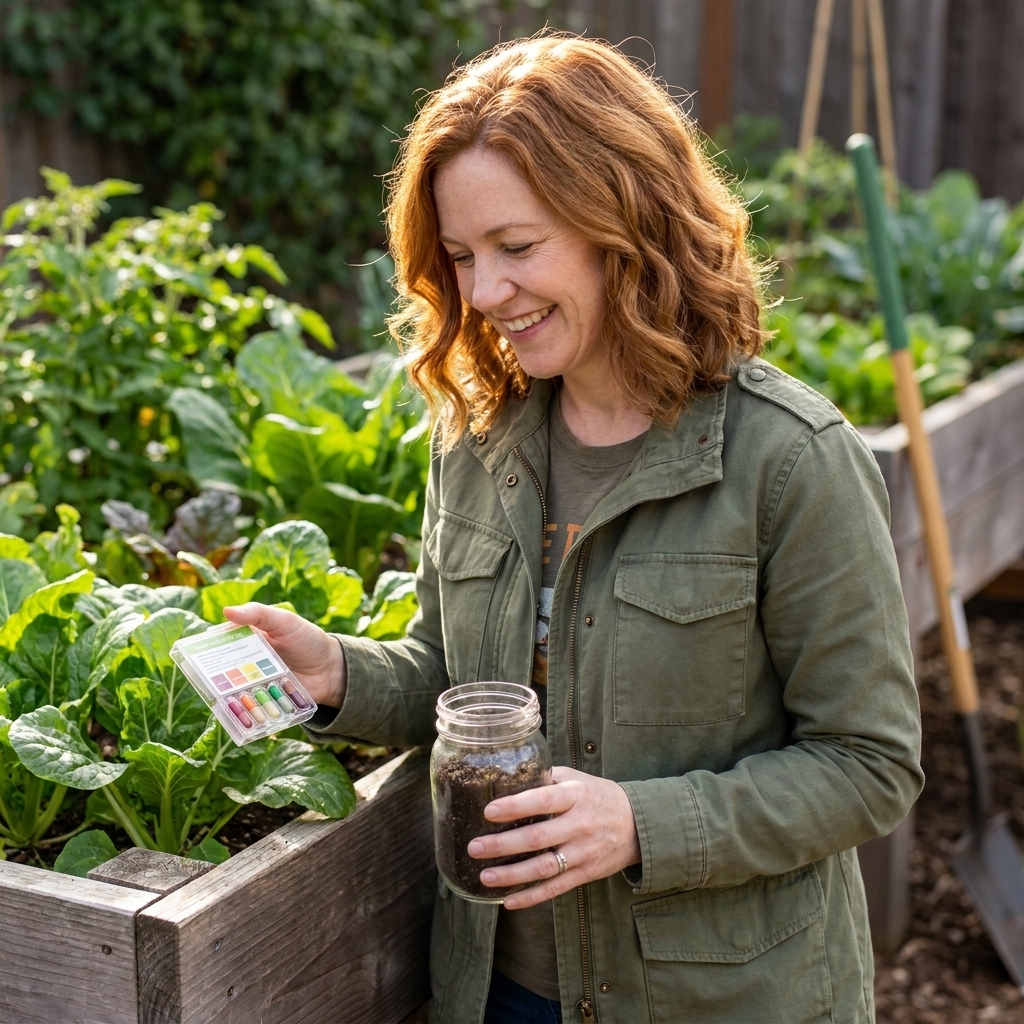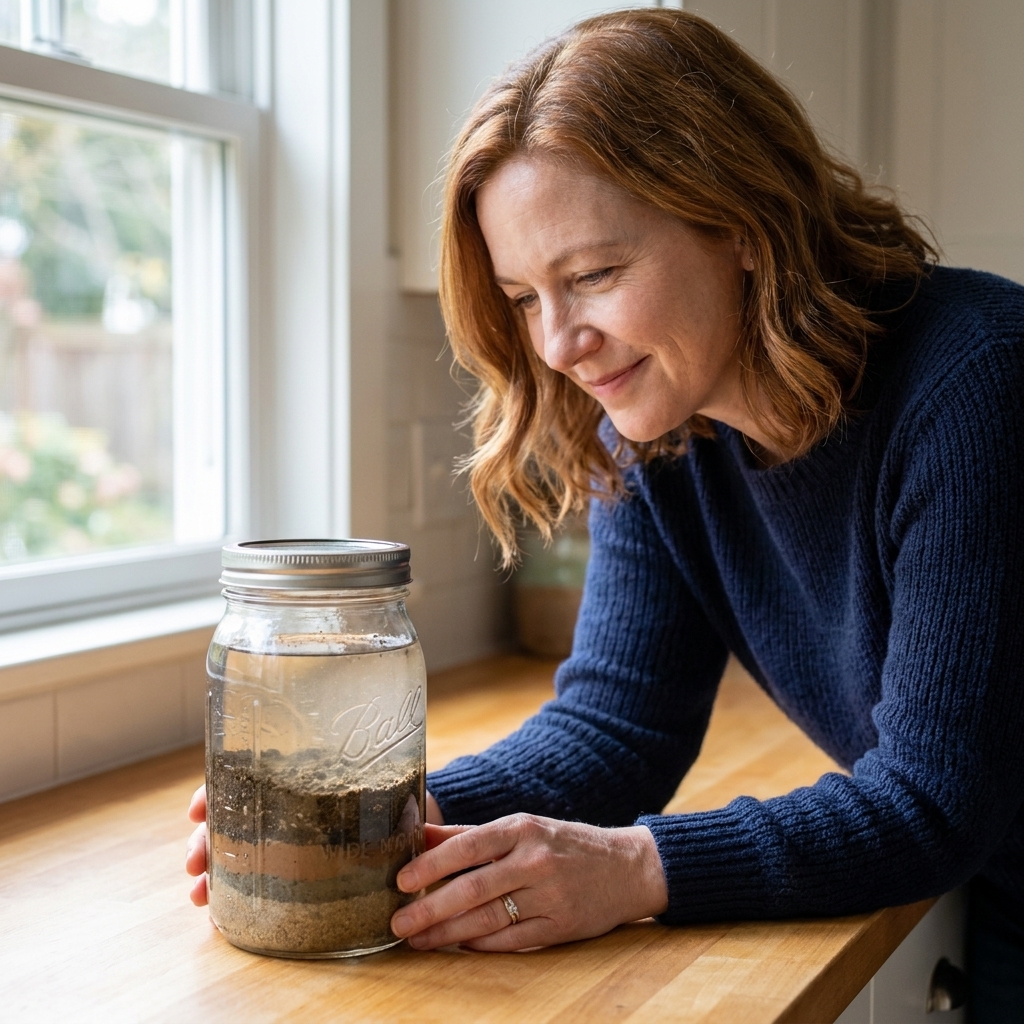
The first time I opened a professional soil test report, I felt like I was reading a recipe written in another language. Lots of numbers, mysterious abbreviations, and a recommendation that boiled down to “apply X pounds of something you have never heard of.”
Here is the good news: you do not need a soil science degree to make a soil test useful. You just need to know what the lab is measuring, what those numbers are trying to tell you, and how to translate them into a simple, organic plan you can actually follow.
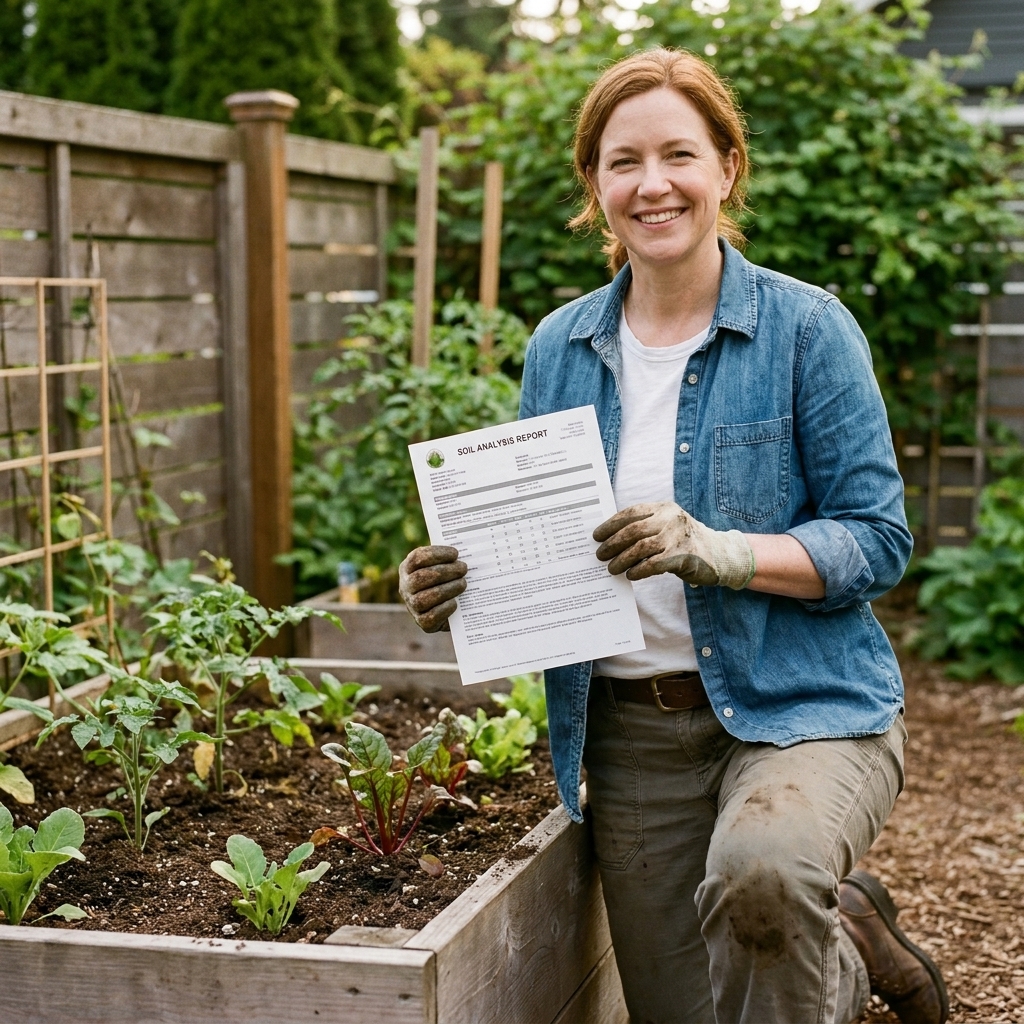
In this guide, I will walk you through the most common sections of an agricultural lab report, explain NPK and key micronutrients in clear terms, and show you how I turn lab data into compost-first next steps.
Before you read the numbers
Soil reports vary, but almost every professional lab result includes:
- Your soil pH (how acidic or alkaline the soil is)
- Phosphorus and potassium (P and K are usually the most consistent “core” nutrients reported)
- Often calcium and magnesium (Ca, Mg and sometimes sulfur)
- Often micronutrients (like Fe, Mn, Zn, Cu, B)
Nitrogen is the wildcard. Many routine soil tests either do not include nitrogen at all, or only include nitrate for a specific sampling window, because nitrogen changes quickly with weather and biology.
Also look for a line that says extraction method (for example, Mehlich-3, Bray, Olsen) and units (ppm, mg/kg, lb/acre, meq/100g). Those details matter because “good” numbers depend on the method, and you should not compare results from different labs or different extraction methods year to year as if they are identical.
My quick sanity check
Before I change anything in my garden, I ask:
- Did I sample correctly (multiple subsamples mixed together, not just one scoop)?
- Did I sample at the right depth (for most garden beds, 4 to 6 inches is typical)?
- Did I avoid obvious “hot spots” (fertilizer bands, compost piles, pet areas, drip line puddles)?
- Is this report for the right area (lawn vs veggie bed vs orchard)?
- Do the results match what I see (chlorosis, poor yields, blossom end rot, slow growth)?
Soil tests are powerful, but they are not fortune tellers. They are one tool, and you will use them best when you pair them with what your plants are showing you.
pH changes everything
If you read only one part of your report, read the pH. pH controls how available many nutrients are to plants. You can have plenty of iron in the soil, for example, and still see yellow leaves if pH is making that iron hard for roots to take up.
Typical garden ranges
- Most vegetables: roughly 6.0 to 7.0 is a comfortable zone
- Potatoes: often do better a bit more acidic than many other vegetables
- Brassicas: tend to tolerate the higher end of the range
- Blueberries and some ornamentals: more acidic, often around 4.5 to 5.5
- Very high pH (alkaline): can lock up iron, manganese, zinc
- Very low pH (acidic): can increase aluminum and manganese availability to problematic levels and reduce calcium and magnesium availability (symptoms vary by soil and crop)
Organic moves for pH
pH adjustments should be slow and measured. Big swings cause new problems.
- To raise pH: garden lime (calcitic) or dolomitic lime (adds magnesium too), based on lab recommendation
- To lower pH: elemental sulfur is common, but it works gradually and depends on soil biology and moisture
- My compost note: compost often buffers pH over time, but the direction and strength depend on the compost and the starting soil. Think of it as steady support, not a precision pH tool.
If your report includes buffer pH or lime requirement, that is the lab telling you how resistant your soil is to pH change. Clay and high organic matter soils usually take more effort to shift than sandy soils.
N-P-K in the real garden
NPK is shorthand for three primary macronutrients:
- N (Nitrogen): leafy growth, overall vigor, green color
- P (Phosphorus): root growth, flowering, fruiting, energy transfers
- K (Potassium): water regulation, disease resistance, overall plant sturdiness
Fertilizer bags advertise NPK as three numbers (like 4-4-4). Soil tests usually report P and K clearly, but nitrogen is the trickiest of the three.
Why nitrogen can be confusing
Many labs do not treat nitrogen like P and K because nitrogen changes fast. Rain, temperature, watering, and microbial activity can swing nitrogen availability quickly.
Your report may show:
- Nitrate-N (NO3-N) and sometimes Ammonium-N (NH4-N)
- Total nitrogen (more common in comprehensive tests, and not always a direct “available now” number)
- Organic matter percentage, which hints at nitrogen supplying power over the season
Compost reality check: compost is more of a slow-release, soil-building nitrogen source than a quick green-up. If your crops need a fast nitrogen bump, think blood meal, feather meal, alfalfa meal, or a well-timed fish emulsion, then let compost do what it does best long-term.
Phosphorus and potassium
With organic gardening, I see more problems from too much phosphorus than too little, especially in beds that get manure, rich compost, or bloom-boosting products year after year. Phosphorus accumulates more easily than many gardeners realize.
- High phosphorus can interfere with micronutrients like zinc and iron and can contribute to water pollution if it runs off.
- Low potassium often shows up as weak growth, poor drought tolerance, and lackluster fruit quality.
If your P is already high, compost is still great, but choose composts that are not manure-heavy, and skip bone meal unless the lab clearly shows you need phosphorus.
Calcium, magnesium, sulfur
A lot of beginner confusion comes from focusing only on NPK, while the report is quietly waving a flag about calcium or magnesium.
Calcium (Ca)
Calcium supports cell walls and steady growth. In the garden, we usually talk about calcium when we see blossom end rot in tomatoes and peppers. But blossom end rot is often a water management issue first (inconsistent moisture limits calcium movement) and a soil calcium issue second. High salts, root stress, and bursts of rapid growth can also contribute.
Organic sources: gypsum (adds calcium without raising pH much), calcitic lime (raises pH), quality compost (small amounts plus better soil structure).
Magnesium (Mg)
Magnesium sits at the heart of the chlorophyll molecule. Low magnesium can show as interveinal chlorosis on older leaves.
Organic sources: dolomitic lime (if pH also needs raising), Epsom salt for a targeted short-term correction (sparingly, and only if Mg is actually low).
Sulfur (S)
Sulfur is tied to protein formation and flavor in crops like onions and brassicas. Some labs include it, some do not.
Organic sources: gypsum, elemental sulfur (also lowers pH), compost and decomposing organic matter (slow contribution).
Micronutrients matter
Micronutrients are required in tiny amounts, which is why the report values can look minuscule compared to NPK. Tiny does not mean optional.
Common micronutrients on a lab report include:
- Iron (Fe): deficiency often shows as yellowing on new leaves, especially when soil pH is high
- Manganese (Mn): involved in photosynthesis, issues can mimic iron problems
- Zinc (Zn): growth regulation, often low in high pH soils
- Copper (Cu): enzyme function, deficiency is uncommon in organic-rich soils, and excess is a risk if you use copper-based fungicides
- Boron (B): cell division, flowering and fruit set, easy to overapply
- Molybdenum (Mo): nitrogen processing in plants, sometimes flagged in very acidic soils
Two rules that prevent most mistakes
- Fix pH before chasing micronutrients. Many “deficiencies” are actually nutrient lock-up caused by pH.
- Do not shotgun-apply micronutrient mixes. More is not better here, especially with boron and copper.
If your lab flags a micronutrient as low, look for the lab’s recommended application rate and consider gentle, soil-friendly sources. For example, kelp meal can supply small amounts of micronutrients and is a nice compost companion. For specific deficiencies, targeted products may be appropriate, but I treat them like seasoning, not like compost.
Units and lab language
You may see results reported as:
- ppm (parts per million) or mg/kg: common for nutrient levels
- lb/acre: common for field-scale recommendations, but some labs provide garden conversions
- meq/100g or cmol(+)/kg: common for cation exchange capacity and base saturation
CEC and base saturation
CEC (cation exchange capacity) is basically your soil’s nutrient holding ability. Sandy soils tend to have low CEC. Clay and organic matter increase CEC. Higher is not automatically better, but it explains why some soils need lighter, more frequent feeding while others hold onto nutrients more stubbornly.
Base saturation (if included) shows how much of that nutrient holding space is occupied by calcium, magnesium, potassium, and sodium. It can help explain issues like compaction, crusting, or why potassium seems hard to maintain.
Salts, sodium, and EC
Many reports include EC (electrical conductivity), soluble salts, and sometimes sodium. These matter a lot in raised beds, dry climates, and gardens that get frequent manure, compost, or concentrated organic fertilizers.
- High EC or salts can stress roots and make plants look “nutrient deficient” even when nutrients are present.
- High sodium can contribute to poor soil structure and infiltration, especially in finer-textured soils.
My organic approach here is cautious: first stop piling on salty inputs, then improve drainage and watering consistency, and lean on mulch to keep moisture steady. In some situations, labs recommend gypsum to help with sodium issues, followed by leaching with good-quality water. If EC or sodium is flagged, it is worth calling the lab, because the right fix depends on your soil, your water, and how the bed drains.
Turn results into a plan
Here is the exact order I use when I turn a soil report into action in my own beds.
Step 1: Set your goal
A tomato bed, a salad bed, and a perennial herb patch do not need the same approach. Decide what you are growing there most of the year, not what might visit for two weeks.
Step 2: Fix pH and major imbalances
- If pH is out of range, make a slow correction using lime or sulfur as recommended.
- If calcium is low and pH is already fine, consider gypsum.
- If magnesium is low and pH is low, dolomitic lime may do double duty.
Step 3: Set compost rate
Compost is my default, but I match it to the soil.
- Low organic matter: top-dress 1 to 2 inches of finished compost and keep mulching
- Already high organic matter: use a thinner top-dress, focus on mulch, cover crops, and targeted amendments instead of piling on more rich compost
As a rough guideline, many garden labs consider something like 5 percent organic matter and up to be “high,” but follow your lab’s interpretation categories if they provide them.
If your phosphorus is high, choose compost sources carefully. Plant-based composts tend to be gentler on P than manure-heavy composts.
Step 4: Add NPK with targeted sources
Think “fill the gap,” not “dump a general fertilizer and hope.” A few common organic options:
- For nitrogen: alfalfa meal, blood meal, feather meal, fish emulsion (fast), compost (slow)
- For phosphorus: bone meal or rock phosphate only when truly needed and only at recommended rates
- For potassium: sulfate of potash (SOP), langbeinite (often sold as sulfate of potash magnesia and is a different product than SOP), greensand (very slow), kelp meal (gentle)
If your lab gives recommendations in pounds per acre, look for a conversion line to square feet, or ask the lab. I avoid guessing with concentrated amendments.
Step 5: Treat micros like a topping
If the report flags low zinc or boron, follow the lab’s rate closely. If you are not sure, retest or consult the lab before applying. Micronutrient excess is harder to fix than a mild deficiency.
A quick conversion example
If your lab recommends 100 lb/acre of a material, that equals about 2.3 lb per 1,000 square feet (because an acre is 43,560 square feet). For a 100 square foot garden bed, that is about 0.23 lb, which is roughly 3.7 ounces. That is exactly why I like to weigh amendments for small spaces.
Common surprises
“My phosphorus is high, but my plants are still struggling.”
High phosphorus does not guarantee good growth. Check pH, drainage, compaction, and nitrogen availability. Also consider that high P can aggravate micronutrient issues.
“My potassium is low every year.”
Sandy soils leach potassium easily. Heavy fruiting crops like tomatoes, squash, and potatoes also use a lot. You may need smaller, repeated applications and more organic matter over time.
“Iron is high, but leaves are yellow.”
Classic pH lock-up. If pH is high, iron may be present but unavailable. Focus on pH and soil biology before buying iron products.
“The lab recommends synthetic fertilizer. Do I have to use it?”
No. Most labs serve farms and default to conventional products because they are standardized and easy to calculate. You can use the nutrient need they list and meet it with organic sources. It may take a little math, but it is absolutely doable.
How often to test
For most home gardens, every 2 to 3 years is plenty, unless you are making major corrections (like significant pH changes) or you are troubleshooting a persistent issue.
To make your tests more useful over time:
- Sample at the same time of year when possible
- Keep notes on what you added (compost depth, lime rate, fertilizers)
- Retest after a full season, not two weeks after an amendment
Soil building is a long game. The goal is not perfect numbers on paper. The goal is resilient soil that grows strong plants with fewer problems each season.

Quick glossary
- ppm: parts per million, a concentration
- CEC: nutrient holding capacity of soil
- Mehlich-3: a common extraction method for many nutrients
- Base saturation: percent of CEC occupied by key cations like Ca, Mg, K, Na
- EC: electrical conductivity, a common proxy for soluble salts
- Organic matter %: estimated portion of soil made of decomposed plant and animal material
I can help you read yours
If you paste your soil test numbers (and the extraction method and units), tell me what you are growing, and whether you garden in beds or in-ground, I can help you turn it into a simple compost-first plan with a short list of organic amendments and timing.